The Chitkul Notebooks — Last Village Before Tibet
The road to Chitkul ends at an army checkpoint where a soldier writes your name in a register. Beyond this point, the Baspa River continues into a glacial valley that leads to the Tibetan Plateau. You cannot follow it. Nobody can, except the army patrols and the ibex.
Chitkul sits at 3,450 metres in the Baspa Valley of Kinnaur district — the last village on the old Hindustan-Tibet trade route. The road that brought you here, winding along the Baspa from Sangla through apple orchards and walnut groves, runs out of ambition at the village edge. The valley narrows. The mountains close in. India, geographically speaking, comes to a full stop.
The Village
Population: roughly 600, depending on the season. In summer, Chitkul is fully occupied — every household is here, the fields are planted with rajma (kidney beans) and peas, and the pastures above the village are dotted with sheep. In winter, about a third of the village migrates down to Sangla or Reckong Peo. The rest stay and endure: temperatures dropping to -15°C, snow blocking the road for weeks at a time, and a silence so profound that the river becomes the loudest sound in the valley.
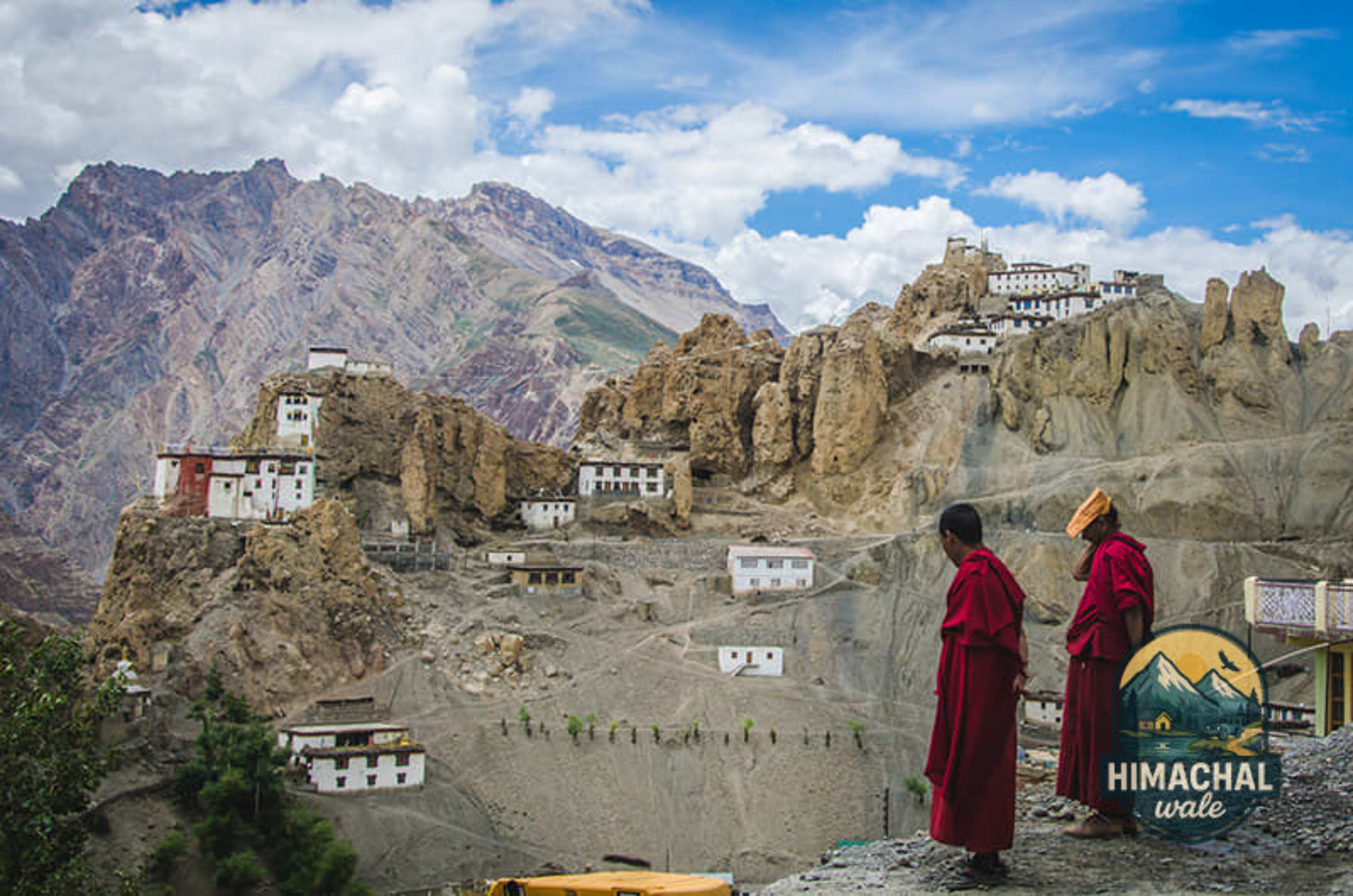
The houses are Kinnauri traditional: stone foundations, wooden upper storeys, flat slate roofs. The construction technique hasn't changed in centuries — alternating layers of stone and timber that flex during earthquakes instead of cracking (Kinnaur sits on a major seismic zone). The upper floor is residential; the ground floor is for animals in winter. The shared warmth rises.
The Temple
The Mathi Temple, dedicated to the goddess Chitkul Mathi, sits at the centre of the village. It's a pagoda-style wooden structure — about 500 years old, though the locals say the deity is older than the building, carried here by a previous generation from somewhere further up the valley.
The temple's wooden doors are carved with figures from the Mahabharata. The interior is off-limits to non-Hindus (and to cameras, regardless of faith). During the annual village festival in September, the goddess is taken out in a procession — carried on a palanquin by the village men, accompanied by the sounds of traditional Kinnauri instruments: the dholru drum and the turhi horn.
The Border
The Indo-Tibetan Border Police maintains a post just above Chitkul. The soldiers are young men from across India — Kerala, Bihar, Rajasthan — posted to one of the most remote points in the country. They serve 2-3 year rotations. In winter, their supplies come by helicopter when the road is blocked.
The relationship between village and post is cordial. The soldiers buy vegetables from the village in summer. The villagers alert the post when weather is coming. There is an unspoken understanding: the soldiers protect the border; the village protects the valley. Both have been doing their jobs for a very long time.
What You'll Find
Two guesthouses, both basic. One general store that stocks biscuits, chips, and instant noodles. A few homestays where the family cooks rajma-chawal and serves it on steel thalis. A bridge over the Baspa where the water runs a blue-green that looks artificial but is just glacial sediment doing what glacial sediment does.
And a specific quality of quiet. Chitkul is not remote by Spiti or Ladakh standards — it's only 25 km from Sangla, which has ATMs and phone signal. But there's something about being at the last point — the end of the road, the edge of the map — that strips away distraction. You're not here because Chitkul is on the way to somewhere else. You're here because the road runs out, and running out of road turns out to be exactly what you needed.


