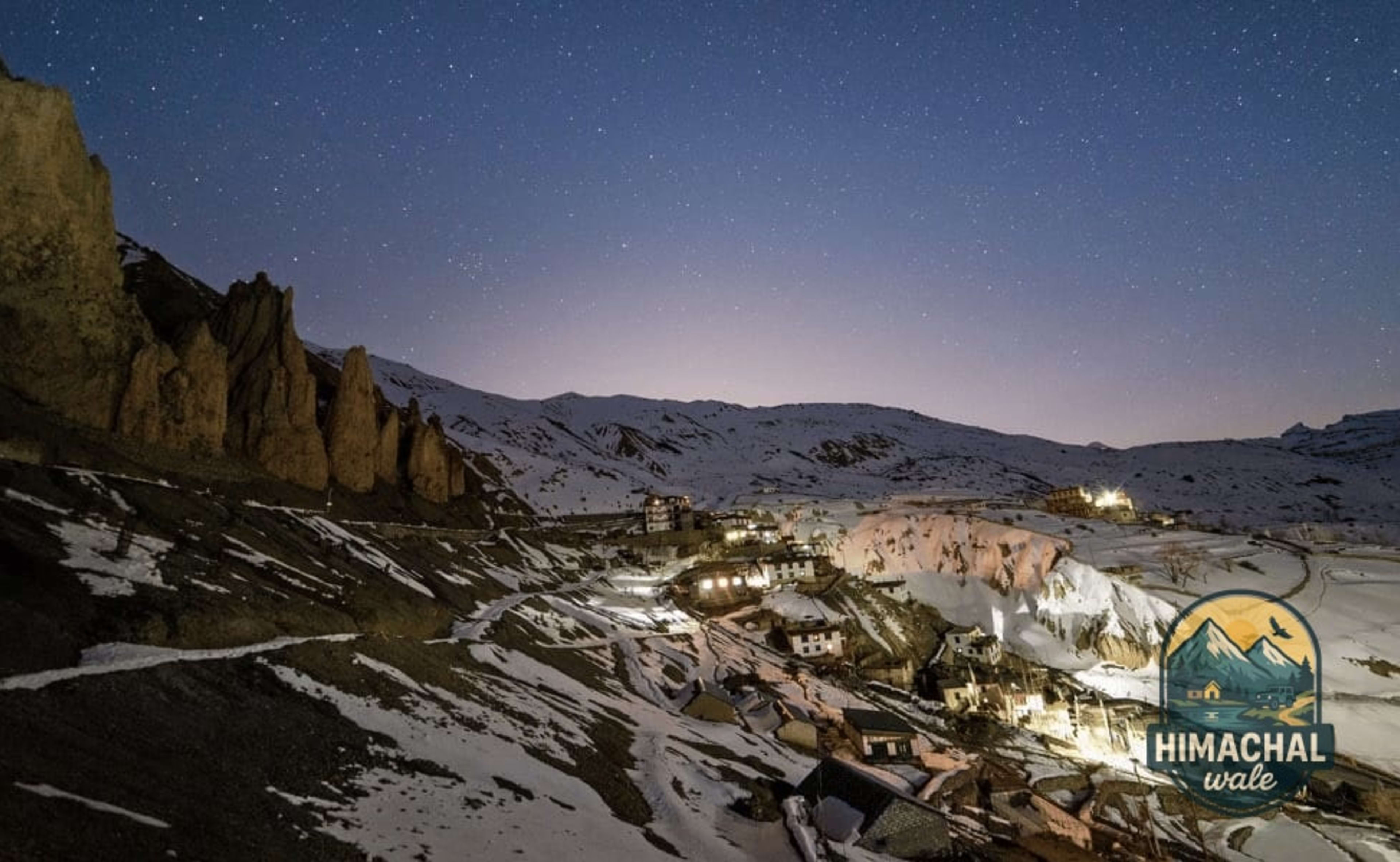
Malana — The Village That Governed Itself for 3,000 Years (And Still Does)
The Rules of Entry
In Malana, you are kanara — an outsider, an untouchable. This is not rudeness. It is a 3,000-year-old classification system. The people of Malana believe they are descendants of Alexander the Great's soldiers, or alternatively of the Aryan sage Jamlu Rishi, and that their bloodline must remain unpolluted.
The rules are simple and non-negotiable: do not touch any Malanese person, their houses, their walls, or their belongings. Do not enter their temples. Do not sit on their benches. If you accidentally touch a wall, you may be fined — and you will pay, because the village court's decisions are binding.
The Parliament
Malana's governance system is possibly the oldest surviving democratic institution in the world. The village is governed by a council of elected representatives called the Kanishthang (lower house) and the Jayeshthang (upper house). Disputes are settled in these councils according to customary law that predates written Himachali history.
The supreme authority is Jamlu Devta — the village deity. When the council cannot reach a decision, the matter is referred to Jamlu, who communicates through a medium (the gur). This is not symbolic. A property dispute in Malana may be settled by divine consultation. The Indian judicial system has historically respected Malana's internal governance, and Indian courts have been known to decline jurisdiction over intra-village matters.
The Architecture
Malana's houses are traditional Himachali kath-kuni construction — alternating layers of stone and deodar wood, without mortar. The wood acts as a shock absorber during earthquakes (the region sits on an active seismic zone). A devastating fire in 2008 destroyed half the village, but it was rebuilt in the same style, using the same techniques. The new houses look exactly like the old ones, because in Malana, tradition is not aesthetic preference. It is law.
The Jamlu Devta temple sits at the top of the village. You cannot enter. You cannot photograph the deity. You can stand at the boundary and look at the carved wooden facade, which features some of the finest traditional wood carving in the Kullu valley.
The Economy
Malana was, for centuries, a self-sufficient pastoral village growing barley, wheat, and lentils on terraced fields. Its isolation — the village had no road access until 2017, requiring a 4-hour trek from Jari — meant that it developed independently of the lowland economy.
The village became internationally famous (or infamous) for Malana Cream — a cannabis resin whose quality is legendary among connoisseurs. The cannabis grows wild in the valley and has been cultivated for generations. Recent law enforcement drives have reduced production, and the village economy is slowly shifting toward tourism and hydropower compensation (a dam on the Malana river provides royalties to the village).
Getting There
From Jari (on the Kullu-Manali highway, about 80 km from Kullu), a road now reaches close to the village, reducing the trek to about 45 minutes. The trail climbs steeply through a pine forest, crosses a small bridge, and enters the village through a stone gateway.
There are a couple of guesthouses on the outskirts (not inside the village proper). The villagers will sell you food — omelettes, maggi, chai — but served on separate plates that you must wash yourself. They are not being hostile. They are being themselves, as they have been for 3,000 years.
Visit in September or October, when the weather is clear and the terraced fields are golden with harvest. Walk slowly. Look carefully. Don't touch anything. And understand that you are in one of the last places on earth where a village has successfully resisted every empire, every government, and every tourist season that tried to absorb it.


