1 of 6 images
Immersive Tour
Narkanda, ShimlaShekhar Khanolkar — Narkanda & Apple Orchards Getaway
₹36,000
Sold out
About this experience
Shekhar Khanolkar — Narkanda & Apple Orchards Getaway — a custom 4-day itinerary crafted for SHEKHAR KHANOLKAR.
Shekhar Khanolkar — Narkanda & Apple Orchards Getaway — a custom 4-day itinerary crafted for SHEKHAR KHANOLKAR.
Itinerary
Your journey, day by day
Chandigarh → Kufri → Shimla → Narkanda
Your Himalayan journey begins where the…
Your Himalayan journey begins where the plains end.
From Chandigarh airport — itself a…
From Chandigarh airport — itself a monument to modernist vision, designed by the Swiss-French architect Le Corbusier for India's first planned city in the 1950s — your driver steers north toward a wall of blue hills that grow taller and more detailed as the car leaves the Punjab flatlands.
By the time you reach the…
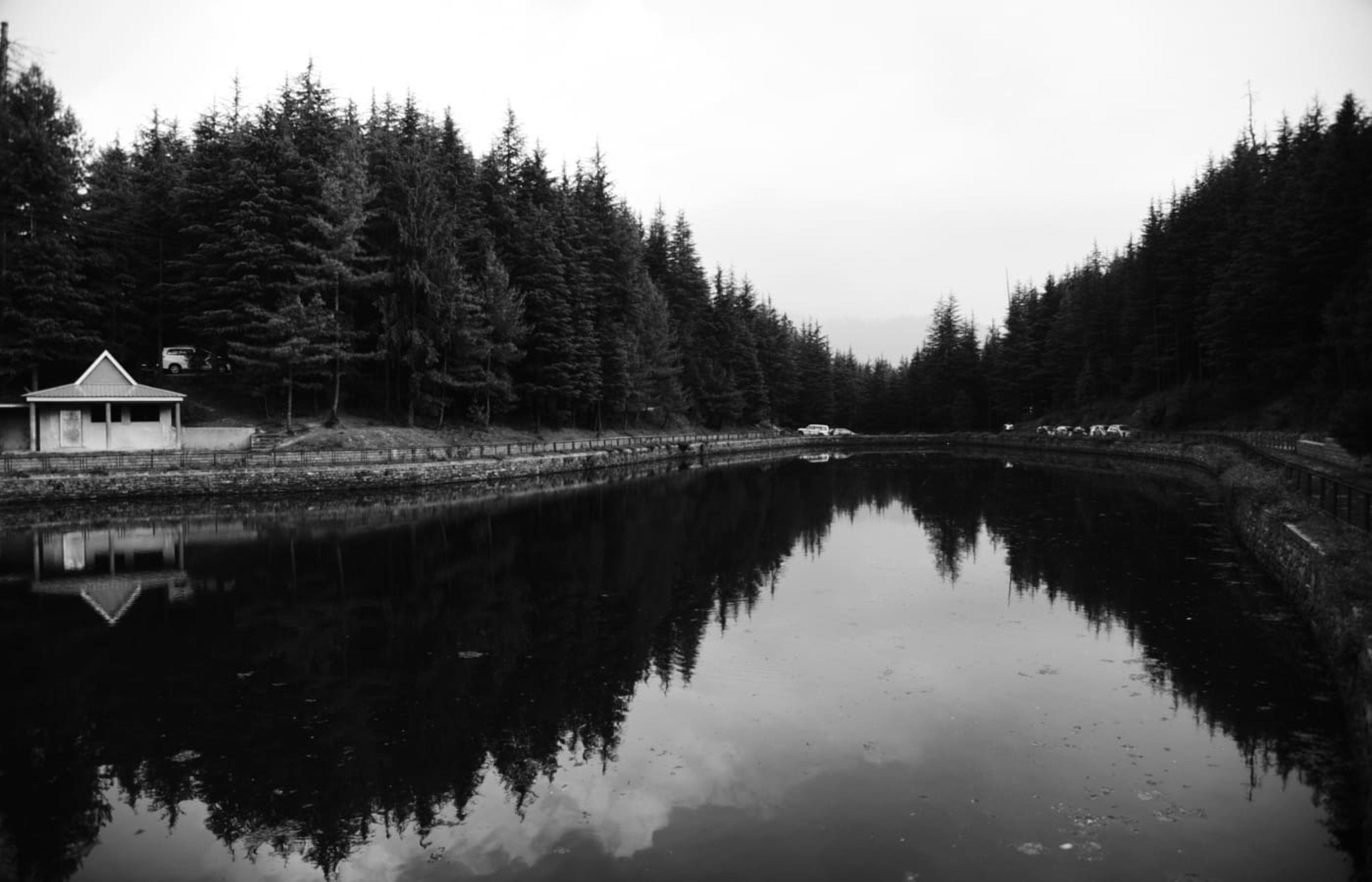
By the time you reach the first hairpin bends above Kalka and enter the Shivalik foothills, the air has already changed — cooler, lighter, carrying the faint green smell of pines.
The elevation climbs from 320 m…
The elevation climbs from 320 m at Chandigarh to over 2,700 m at Narkanda in roughly 170 km: one of the steepest sustained ascents accessible by road in north India.
**Kufri — Where the British Came…
**Kufri — Where the British Came to Ski** Kufri sits at 2,622 m on a broad meadow ridge 16 km above Shimla, and its name carries a quiet mystery.
Local etymologists trace it to "Kufar"…
Local etymologists trace it to "Kufar" — a Pahari word meaning a natural depression or hollow that holds water, describing a small lake that once filled this ridge before the forest claimed it.
The British discovered Kufri in the…
The British discovered Kufri in the late 19th century and developed it as a winter sports playground — the open grassy slopes became natural ski runs from January through March, and what was a shepherd's meadow became a fashionable escape from Shimla's social season.
Today those same slopes remain: in…
Today those same slopes remain: in winter they vanish under three to four feet of snow; in summer and autumn they are covered in wild strawberries, rhododendron scrub, and the bright yellow of St. John's Wort.
The crown jewel of Kufri is…
The crown jewel of Kufri is the Himalayan Nature Park — a 90-hectare wildlife sanctuary that shelters species you are unlikely to encounter anywhere else at this altitude.
Snow leopard (the ghost of the…
Snow leopard (the ghost of the Himalayas, almost never seen but always present in the upper ranges), Himalayan black bear, barking deer, the Tibetan wolf, red fox, and a collection of pheasants that reads like a bird photographer's wish-list: the monal pheasant — Himachal Pradesh's iridescent state bird, its male blazing with copper, gold, green and blue — the koklass, the cheer, and the kalij.
The park is also home to…
The park is also home to the Himalayan yak: an animal so perfectly adapted to altitude that its blood carries 14 % more haemoglobin than a lowland ox, its lungs are proportionally larger, and its dense double coat keeps it warm at -40°C.
Riding one through the meadow is…
Riding one through the meadow is a surreal, slow, deeply un-Instagrammable pleasure that nevertheless remains the memory most visitors reach for first when they think of Kufri.
**The Shimla Ridgeline — A Capital…
**The Shimla Ridgeline — A Capital in the Clouds** Below Kufri, the road curves around the shoulder of Jakhu Hill (2,455 m) — Shimla's highest point, crowned with an ancient Hanuman temple and a troop of rhesus macaques who have lived there so long they have become entirely unafraid of humans (and very interested in your food).
From the viewpoints along this ridge,…
From the viewpoints along this ridge, the city of Shimla unfolds below in a 4-kilometre arc of Victorian and Edwardian architecture clinging to an impossibly steep hillside — Christ Church (1857, second-oldest in north India) with its stained glass imported from England, the Viceregal Lodge in its Scottish baronial stone (where the Shimla Conference of 1945 gathered Nehru, Jinnah, and the British Cabinet in a last attempt to negotiate united independence), and the endless ridge of slate-roofed bazaars running down to the valleys on either side.
From 1864 to 1947 this was…
From 1864 to 1947 this was the summer capital of the British Raj — every viceroy, every cabinet decision, every treaty that shaped the subcontinent passed through this ridge.
**The Long Climb to Narkanda** Past…
**The Long Climb to Narkanda** Past Shimla, NH5 — the old Hindustan-Tibet Highway, built by the British in the 1850s for trade and military access toward Tibet — climbs steadily through Theog, Fagu and Mattiana.
This is the beginning of apple…
This is the beginning of apple country: both sides of the road are walled with terraced orchards, and from late September through October the trees are so heavy with red and golden fruit that the branches touch the ground.
Roadside vendors materialize from nowhere —…
Roadside vendors materialize from nowhere — plastic-sheeted stalls with pyramids of freshly-pressed apple juice and flat wooden crates of Royal Delicious straight from the tree, still bearing their leaves, for ₹100 a box.
Narkanda (2,708 m) announces itself with…
Narkanda (2,708 m) announces itself with a sudden widening of sky.
The town sits on a flat…
The town sits on a flat ridgetop where the main road runs out briefly before continuing north toward the Sutlej gorge and the Kinnaur border, and the view from either side of the ridge is a different country: south the forested Shivalik hills rolling to the plains; north the bare grey ridges of inner Himachal with snow peaks beyond.
The apple orchards of Captain Richard…
The apple orchards of Captain Richard Lee Strachey — introduced to this altitude in the 1870s when the British botanist noticed that the climate, soil pH, and chilling-hour count (the number of hours below 7°C that apple trees require for winter dormancy) precisely mirrored the apple valleys of England — now ring every approach to the town.
Strachey's experiment defined this entire region;…
Strachey's experiment defined this entire region; Himachal Pradesh today produces over 50 % of India's total apple output, and Narkanda is at its heart.
Check in, step out onto your…
Check in, step out onto your hotel's terrace, and watch the Himalayan darkness come up from the valleys while the peaks still hold the last light.
Accommodation
Tani Jubbar Heights
Loading map…
Loading map…
Chandigarh → Kufri → Shimla → Narkanda
Your Himalayan journey begins where the…
Your Himalayan journey begins where the plains end.
From Chandigarh airport — itself a…
From Chandigarh airport — itself a monument to modernist vision, designed by the Swiss-French architect Le Corbusier for India's first planned city in the 1950s — your driver steers north toward a wall of blue hills that grow taller and more detailed as the car leaves the Punjab flatlands.
By the time you reach the…
By the time you reach the first hairpin bends above Kalka and enter the Shivalik foothills, the air has already changed — cooler, lighter, carrying the faint green smell of pines.
The elevation climbs from 320 m…
The elevation climbs from 320 m at Chandigarh to over 2,700 m at Narkanda in roughly 170 km: one of the steepest sustained ascents accessible by road in north India.
**Kufri — Where the British Came…
**Kufri — Where the British Came to Ski** Kufri sits at 2,622 m on a broad meadow ridge 16 km above Shimla, and its name carries a quiet mystery.
Local etymologists trace it to "Kufar"…
Local etymologists trace it to "Kufar" — a Pahari word meaning a natural depression or hollow that holds water, describing a small lake that once filled this ridge before the forest claimed it.
The British discovered Kufri in the…
The British discovered Kufri in the late 19th century and developed it as a winter sports playground — the open grassy slopes became natural ski runs from January through March, and what was a shepherd's meadow became a fashionable escape from Shimla's social season.
Today those same slopes remain: in…
Today those same slopes remain: in winter they vanish under three to four feet of snow; in summer and autumn they are covered in wild strawberries, rhododendron scrub, and the bright yellow of St. John's Wort.
The crown jewel of Kufri is…
The crown jewel of Kufri is the Himalayan Nature Park — a 90-hectare wildlife sanctuary that shelters species you are unlikely to encounter anywhere else at this altitude.
Snow leopard (the ghost of the…
Snow leopard (the ghost of the Himalayas, almost never seen but always present in the upper ranges), Himalayan black bear, barking deer, the Tibetan wolf, red fox, and a collection of pheasants that reads like a bird photographer's wish-list: the monal pheasant — Himachal Pradesh's iridescent state bird, its male blazing with copper, gold, green and blue — the koklass, the cheer, and the kalij.
The park is also home to…
The park is also home to the Himalayan yak: an animal so perfectly adapted to altitude that its blood carries 14 % more haemoglobin than a lowland ox, its lungs are proportionally larger, and its dense double coat keeps it warm at -40°C.
Riding one through the meadow is…
Riding one through the meadow is a surreal, slow, deeply un-Instagrammable pleasure that nevertheless remains the memory most visitors reach for first when they think of Kufri.
**The Shimla Ridgeline — A Capital…
**The Shimla Ridgeline — A Capital in the Clouds** Below Kufri, the road curves around the shoulder of Jakhu Hill (2,455 m) — Shimla's highest point, crowned with an ancient Hanuman temple and a troop of rhesus macaques who have lived there so long they have become entirely unafraid of humans (and very interested in your food).
From the viewpoints along this ridge,…
From the viewpoints along this ridge, the city of Shimla unfolds below in a 4-kilometre arc of Victorian and Edwardian architecture clinging to an impossibly steep hillside — Christ Church (1857, second-oldest in north India) with its stained glass imported from England, the Viceregal Lodge in its Scottish baronial stone (where the Shimla Conference of 1945 gathered Nehru, Jinnah, and the British Cabinet in a last attempt to negotiate united independence), and the endless ridge of slate-roofed bazaars running down to the valleys on either side.
From 1864 to 1947 this was…
From 1864 to 1947 this was the summer capital of the British Raj — every viceroy, every cabinet decision, every treaty that shaped the subcontinent passed through this ridge.
**The Long Climb to Narkanda** Past…
**The Long Climb to Narkanda** Past Shimla, NH5 — the old Hindustan-Tibet Highway, built by the British in the 1850s for trade and military access toward Tibet — climbs steadily through Theog, Fagu and Mattiana.
This is the beginning of apple…
This is the beginning of apple country: both sides of the road are walled with terraced orchards, and from late September through October the trees are so heavy with red and golden fruit that the branches touch the ground.
Roadside vendors materialize from nowhere —…
Roadside vendors materialize from nowhere — plastic-sheeted stalls with pyramids of freshly-pressed apple juice and flat wooden crates of Royal Delicious straight from the tree, still bearing their leaves, for ₹100 a box.
Narkanda (2,708 m) announces itself with…
Narkanda (2,708 m) announces itself with a sudden widening of sky.
The town sits on a flat…
The town sits on a flat ridgetop where the main road runs out briefly before continuing north toward the Sutlej gorge and the Kinnaur border, and the view from either side of the ridge is a different country: south the forested Shivalik hills rolling to the plains; north the bare grey ridges of inner Himachal with snow peaks beyond.
The apple orchards of Captain Richard…
The apple orchards of Captain Richard Lee Strachey — introduced to this altitude in the 1870s when the British botanist noticed that the climate, soil pH, and chilling-hour count (the number of hours below 7°C that apple trees require for winter dormancy) precisely mirrored the apple valleys of England — now ring every approach to the town.
Strachey's experiment defined this entire region;…
Strachey's experiment defined this entire region; Himachal Pradesh today produces over 50 % of India's total apple output, and Narkanda is at its heart.
Check in, step out onto your…
Check in, step out onto your hotel's terrace, and watch the Himalayan darkness come up from the valleys while the peaks still hold the last light.
Accommodation
Tani Jubbar Heights
- Airport pickup & drop (Chandigarh)
- Accommodation (3 nights)
- Daily breakfast & dinner
- All sightseeing as per itinerary
- Private vehicle for the entire trip
Difficulty & Fitness
Eligibility & Difficulty
Are You Ready for This Adventure?
Assess your readiness with our difficulty guide below.
Difficulty Grade
Easy
Level 0/5
EasyModerateExtreme
Suitable for beginners. No prior trekking experience required.
Fitness Level
Beginner friendly · leisurely walks up to 3 hrs
Best Season
August
Elevation Profile
Elevation profile
- Lowest stop
- 321 m
- Highest stop
- 2,708 m
- Known altitudes
- 6 / 6
Chandigarh / Day 1 / 321 m
Approximate stop altitudes, not a measured road or trail profile. Locations missing for day 2, 3.
Packing List
What to Bring
Check off items as you pack. Essential items are marked with a badge.
0/17
packed
Frequently Asked Questions
Got Questions? We've Got Answers
Still have questions? Contact our team for personalized answers.
Cancellation Policy
Flexible Booking, Transparent Refunds
We understand plans change. Here's our straightforward cancellation policy.
Cancellation Window
Cash Refund
Voucher Refund
60+ days before departure
5%
No deduction
30-60 days before departure
10%
No deduction
15-30 days before departure
50%
15%
10-15 days before departure
75%
30%
Less than 10 days
No Refund
90%
Cash refunds are processed within 7-14 working days to the original payment method. Voucher refunds are issued instantly and can be used for any future booking. For detailed terms, please refer to our Terms & Conditions.
Simple & Seamless
How it works
1
Pick your dates
Choose a slot that works for your crew.
2
Confirm & pay
Secure the experience with transparent pricing.
3
Meet your host
We share itineraries, contacts, and prep within 48h.
₹36,000
Shekhar Khanolkar — Narkanda & Apple Orchards Getaway·Sold out
